What are the 7 rules of flag etiquette
A truly professional demeanor will give you access to a competitive edge, yet there are many unwritten expectations that-if you are not aware of them-can jeopardize your reputation https://iconicint.com/review/lucky-tiger/. The Unwritten Rules of Professional Etiquette gives you an honest account of the ways faculty silently judge students without pulling any punches. With this straightforward advice you can sidestep the hidden graduate school pitfalls and emerge at the top of your class. Covering topics such as excelling in interviews, responding to constructive feedback, and dealing with difficult faculty, this compendium is an essential resource for navigating the complex world of academic relationships. While this is an indispensable handbook for graduate students, undergrads practicing this advice will be truly outstanding.
Did you know that no one cares about your grades in graduate school because everyone gets As? Did you know that all students are doing extra activities to pad their CVs and resumes? Do you wonder how you are supposed to stand out among your peers and get access to special projects, training opportunities, or internship placements? Do you know th…
Even more complicated, the application of professionalism to specific situations varies not only by profession but also by context. For example, the particular expectations of a lawyer may be different from those of a teacher, and what may work in a hospital might not work in a business office. In both cases, the would-be professional will have to make a judgment based on the best available options. The fact that professionalism requires judgment necessarily means that there is no single right way to be professional in every situation. That is why you need to develop a mindset that maintains focus on your professional responsibilities.
Do you want to stand out as exceptional in school? Did you know that you need more than just good grades to build a positive reputation among your faculty? A truly professional demeanor will give you access to a competitive edge, yet there are many unwritten expectations that—if you are not aware of them—can jeopardize your reputation. The Unwritten Rules of Professional Etiquette gives you an honest account of the ways faculty silently judge students without pulling any punches. With this straightforward advice you can sidestep the hidden graduate school pitfalls and emerge at the top of your class. Covering topics such as excelling in interviews, responding to constructive feedback, and dealing with difficult faculty, this compendium is an essential resource for navigating the complex world of academic relationships. While this is an indispensable handbook for graduate students, undergrads practicing this advice will be truly outstanding.
The people in your program who have evaluative power or authority are the ones who will most directly judge your professionalism. Because of this, I use terms such as professor, faculty member, instructor, supervisor, and advisor somewhat interchangeably; teaching assistants and other senior students may also at times fill teaching or advising roles. It cannot be overstated that how you behave around staff as well as peers also shapes your professional reputation. For example, when a student is rude to our administrative assistant, the faculty hears about it. When students come forward with a concern about the behavior of one of their peers, the faculty will investigate. All of this protects the profession.
Rules of email etiquette
“Your emails are often the best—and sometimes only—demonstration of the quality of your communication skills,” says technology etiquette expert Michele L. Olivier, CEO of O&H Consulting. “Good email etiquette makes a good impression on others, is an important job skill and reduces inbox anxiety for the sender and the receiver.”
Maybe your finger slips when the body of your email is only half-finished, or you hadn’t yet added the attachment you’d been planning to add. Either way, the result is probably going to be embarrassing.
Once you send an email, give the recipient time to respond. The appropriate period to wait often depends on factors such as your relationship to the recipient and your message’s urgency. But generally, it’s best to wait at least 24 hours before following up.

“Your emails are often the best—and sometimes only—demonstration of the quality of your communication skills,” says technology etiquette expert Michele L. Olivier, CEO of O&H Consulting. “Good email etiquette makes a good impression on others, is an important job skill and reduces inbox anxiety for the sender and the receiver.”
Maybe your finger slips when the body of your email is only half-finished, or you hadn’t yet added the attachment you’d been planning to add. Either way, the result is probably going to be embarrassing.
Where would an employee find an employers rules of etiquette
Such a simple act helps foster a friendly and inclusive office environment, making people feel recognized and valued. It nurtures interpersonal relationships and contributes to a positive and welcoming work atmosphere.
Thinking about how your actions affect others, minimizing noise, private phone calls, and handling shared resources carefully are all aspects of being considerate. This professional behavior enhances the work experience for everyone and helps maintain a calm and productive office environment.
In the professional world, success often hinges not only on skills and qualifications but also on the ability to navigate social interactions effectively. Workplace etiquette, therefore, plays a crucial role in creating a positive and productive environment. From communicating respectfully to fostering a culture of inclusivity, adhering to proper etiquette can enhance professional relationships, boost morale, and contribute to overall organizational success.
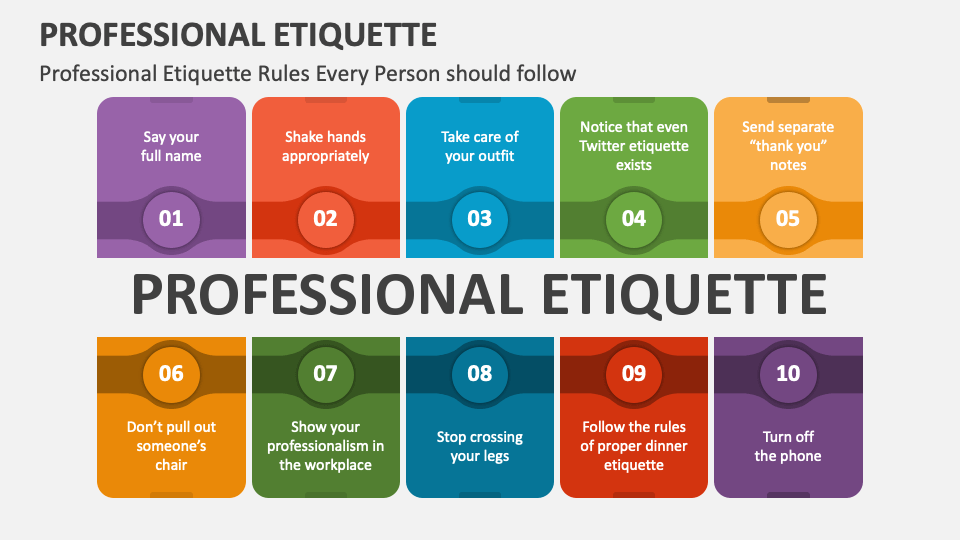
Such a simple act helps foster a friendly and inclusive office environment, making people feel recognized and valued. It nurtures interpersonal relationships and contributes to a positive and welcoming work atmosphere.
Thinking about how your actions affect others, minimizing noise, private phone calls, and handling shared resources carefully are all aspects of being considerate. This professional behavior enhances the work experience for everyone and helps maintain a calm and productive office environment.
In the professional world, success often hinges not only on skills and qualifications but also on the ability to navigate social interactions effectively. Workplace etiquette, therefore, plays a crucial role in creating a positive and productive environment. From communicating respectfully to fostering a culture of inclusivity, adhering to proper etiquette can enhance professional relationships, boost morale, and contribute to overall organizational success.